Free shipping in Spain over €39
Free shipping to Europe, Balearic and Canary Islands > 59€
Specialty coffee roasted in Madrid
Subscribe and save on every order
Free shipping in Spain over €39
Specialty coffee roasted in Madrid
Free shipping to Europe, Balearic and Canary Islands > 59€
10,45 € – 69,00 €Price range: 10,45 € through 69,00 € — available on subscription
Ethiopia G1 natural. Sweet and intense, with notes of peach, dark chocolate and lemon.
Subscribe and save up to 20%
All the coffees you add as a subscription arrive together in one delivery every month. Subscriptions start at 500 g and the more grams, the bigger the discount:
You can mix different coffees: e.g. 3 bags of 250 g = 750 g → 10% off everything.
Peach, Dark chocolate and Lemon
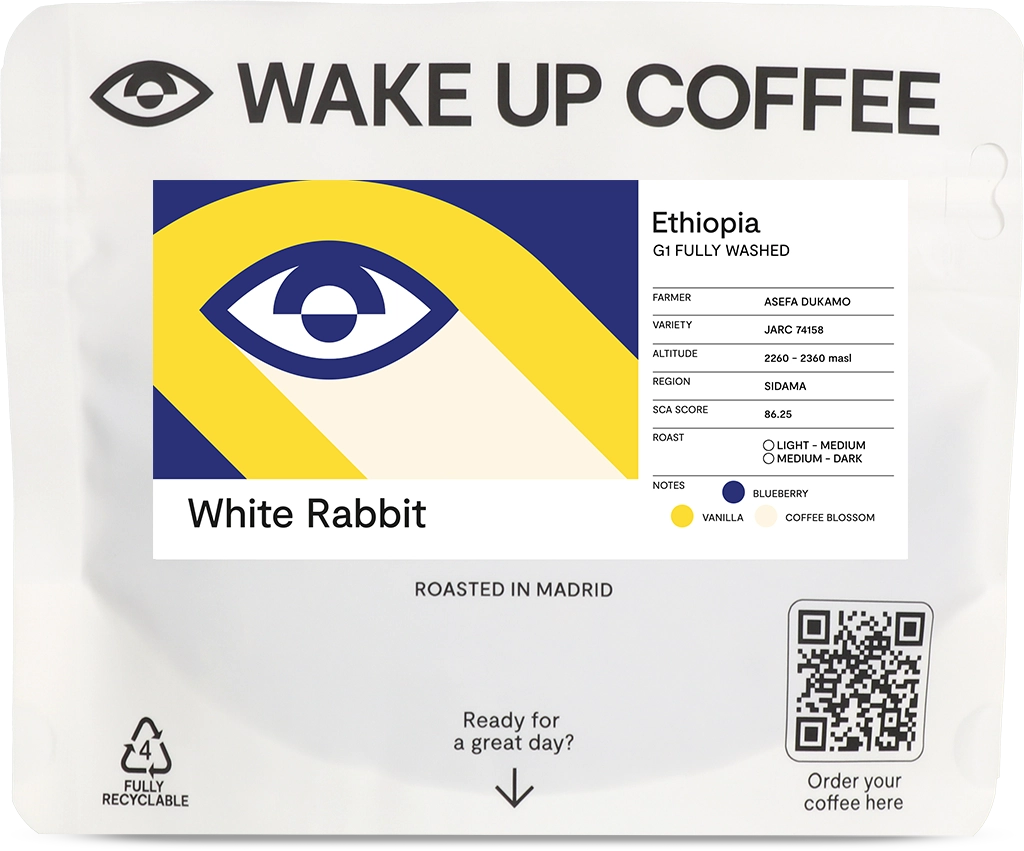
This coffee comes from the renowned coffee-growing region of Sidama in Ethiopia, widely regarded as the birthplace of coffee. This particular lot originates from the Hamasho kebele, through the work of our export partner, Daye Bensa. In the Sidama language, “Hamasho” means snake.
The cherries are harvested by local producers and delivered to Daye Bensa’s wet mill in Hamasho. The owner, Asefa Dukamo, was introduced to the world of coffee at an early age, as his family cultivated coffee alongside other crops.
During his teenage years, he began supplying nearby washing stations with cherries sourced from his family and neighboring communities. Recognizing the lack of nearby infrastructure, he decided to build his own washing station to reduce the distances producers had to travel.
The process begins with the selective handpicking of the ripest cherries. They are then transported to the washing station, where they are sorted by density using water tanks, allowing any floating cherries to be removed.
Next, the cherries are placed on raised African beds, where they dry for 12 to 15 days. During this period, they are turned every 30 minutes to ensure even drying and prevent over-fermentation.
Once dried, the coffee is transported — typically by horse or motorcycle — to the dry mill, where it is hulled and prepared for export.
The washing station follows sustainable practices, including responsible water management and the use of organic waste as fertilizer.